Introduction
Until now, Envato’s AI tools has lived in a separate stack, disconnected from the rest of the library. As creative workflows changed with AI, that quickly became a significant pain for our customers.
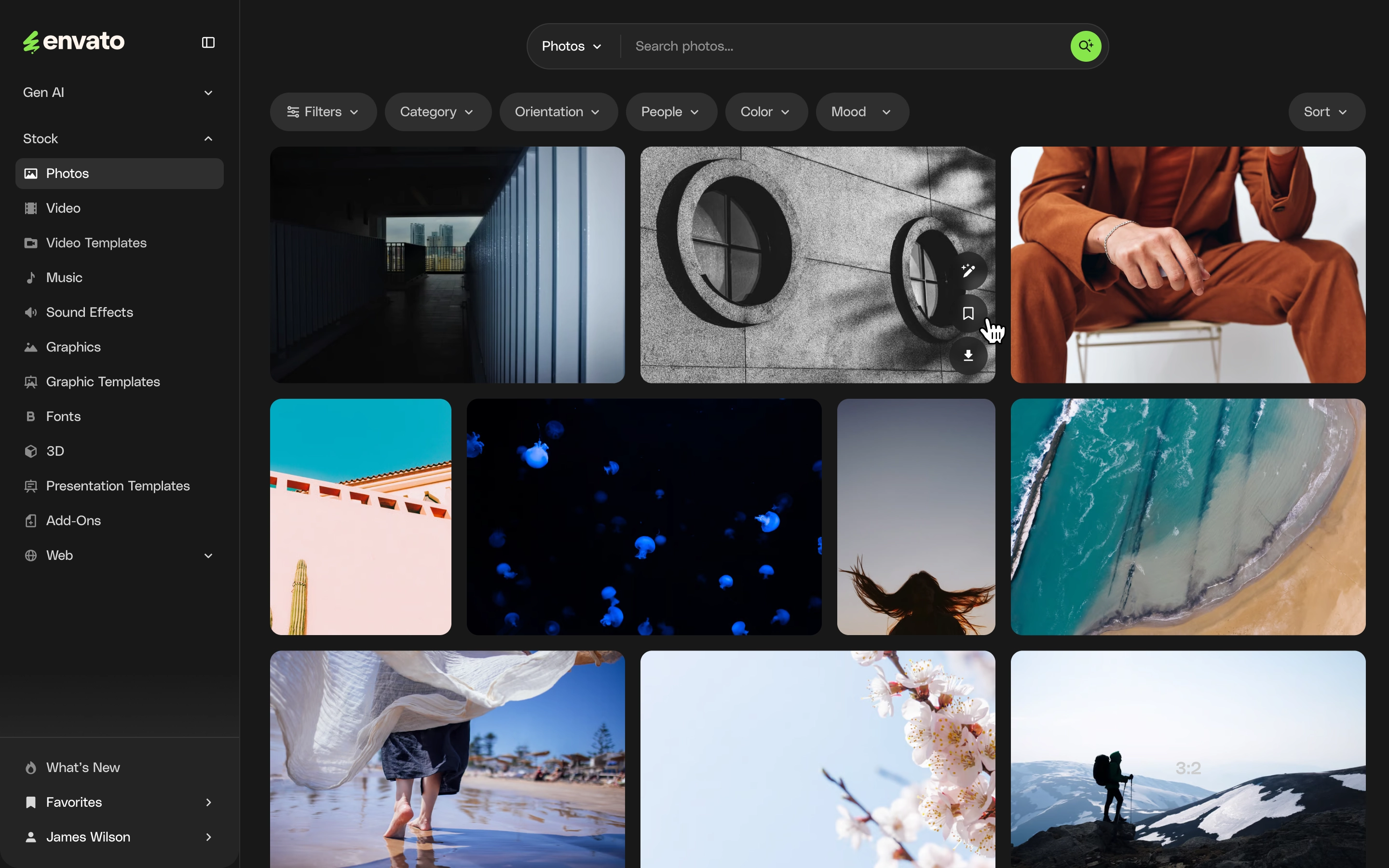
I designed a new web app for Envato, built to bring our stock and AI tools into a single, cohesive experience. The impact was immediate across our North Star metrics:
One workspace, no silos
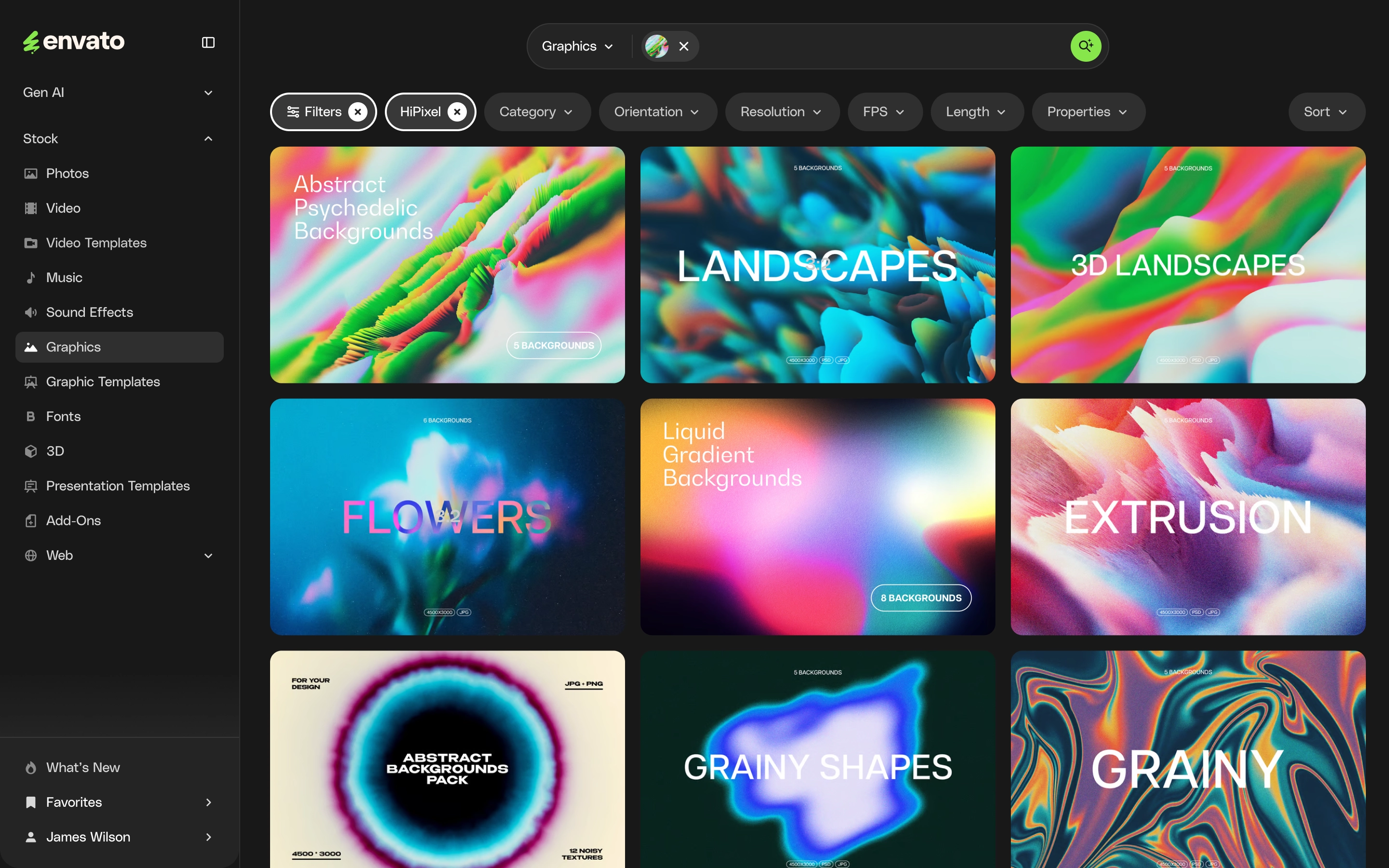
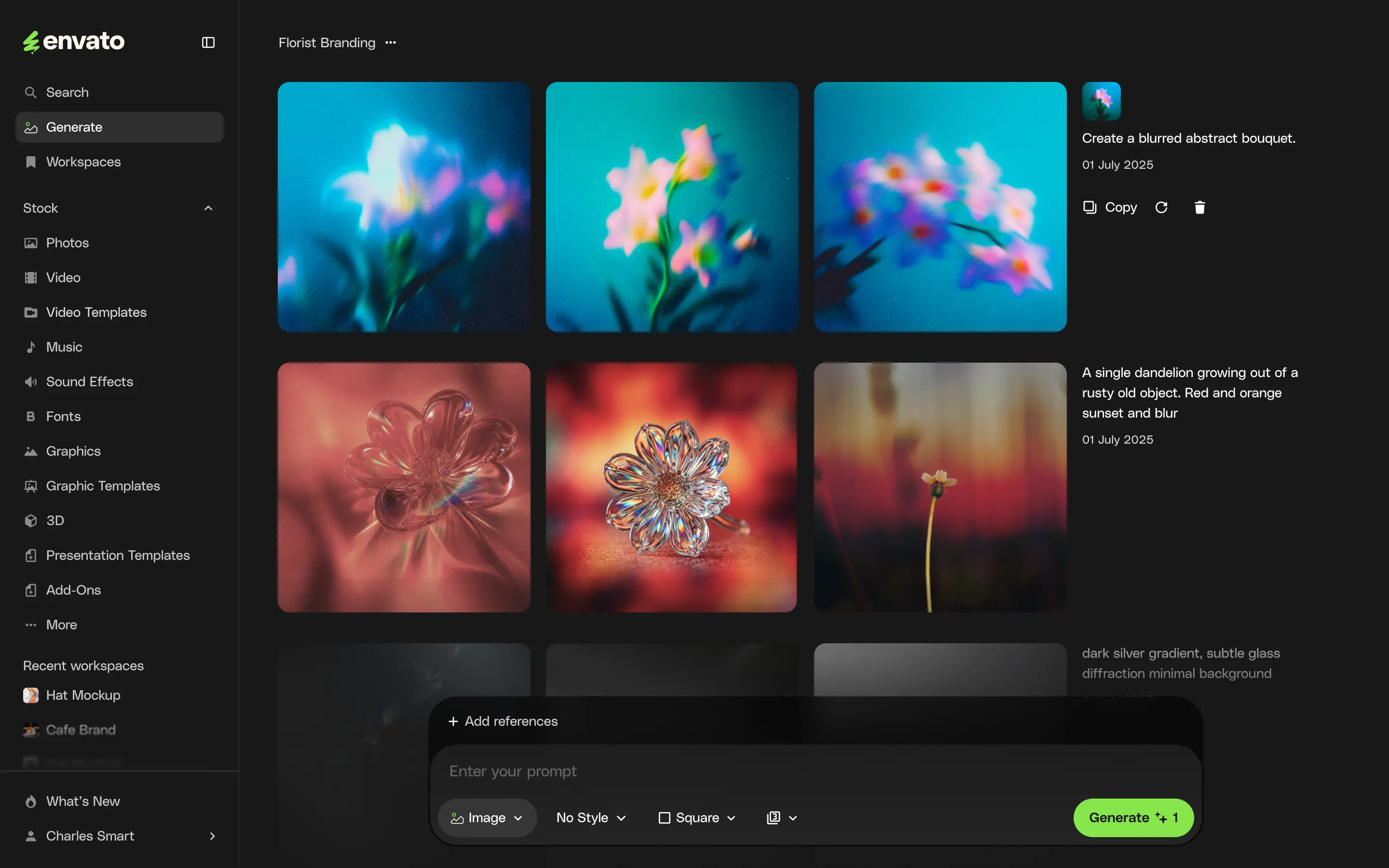
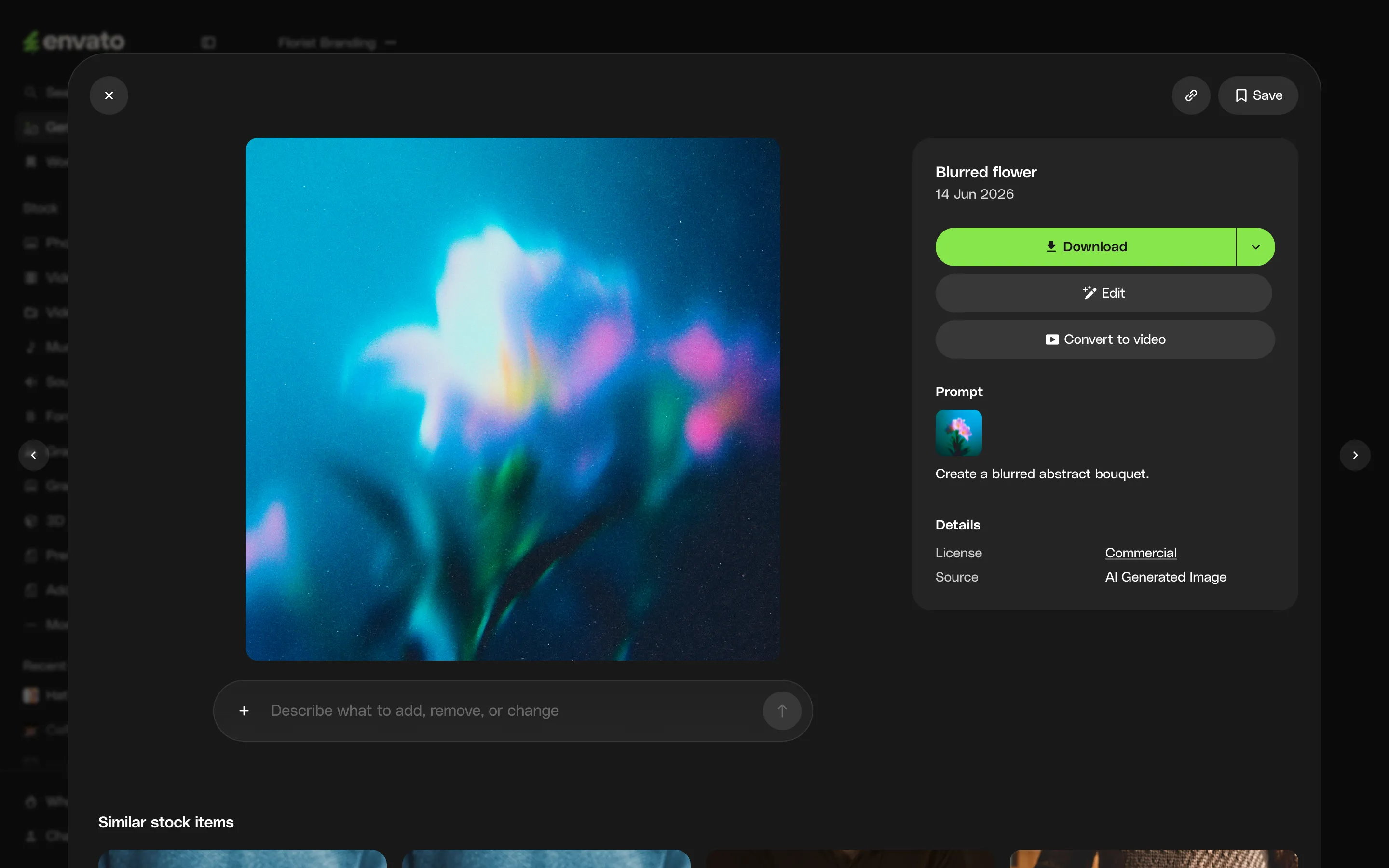
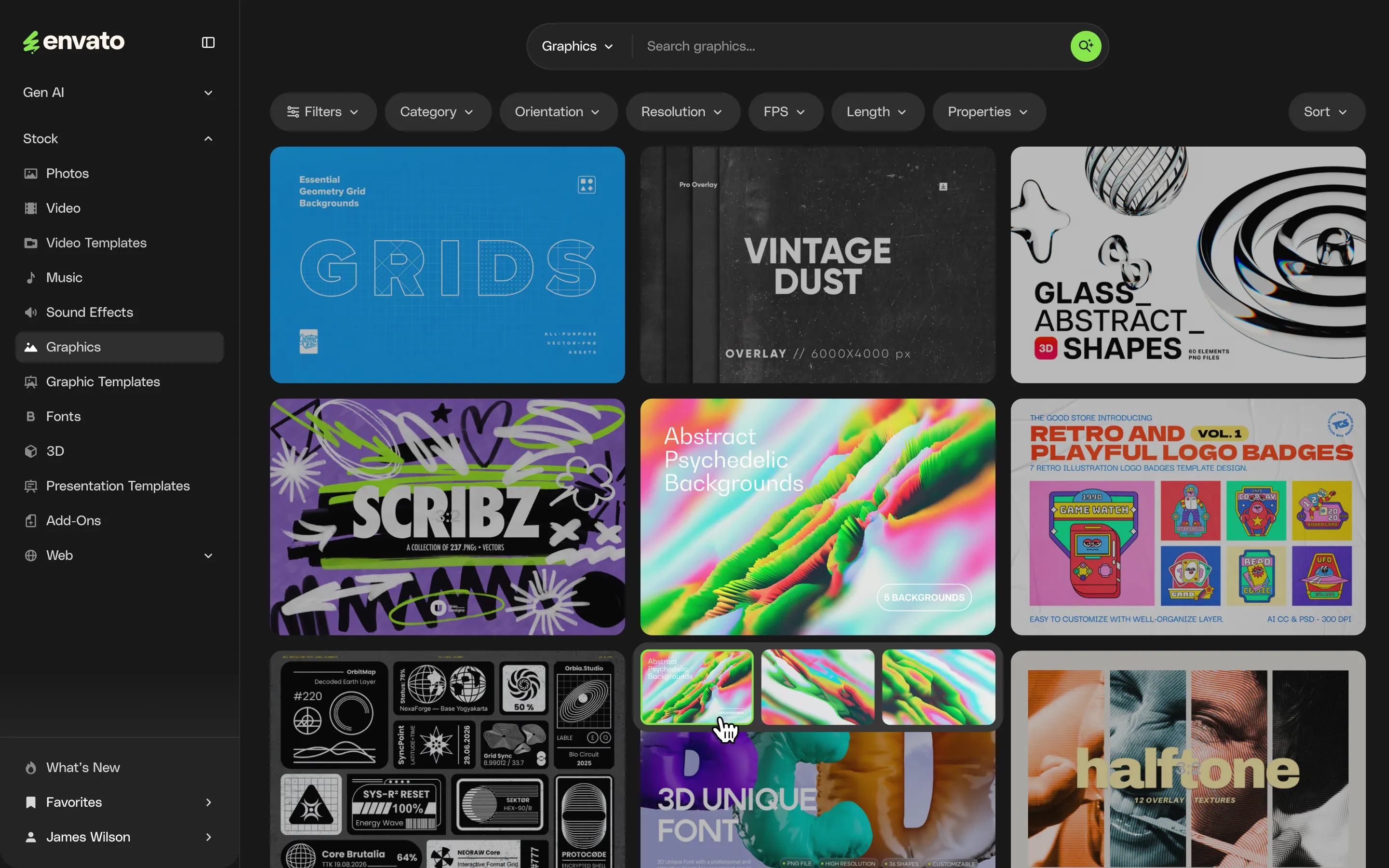
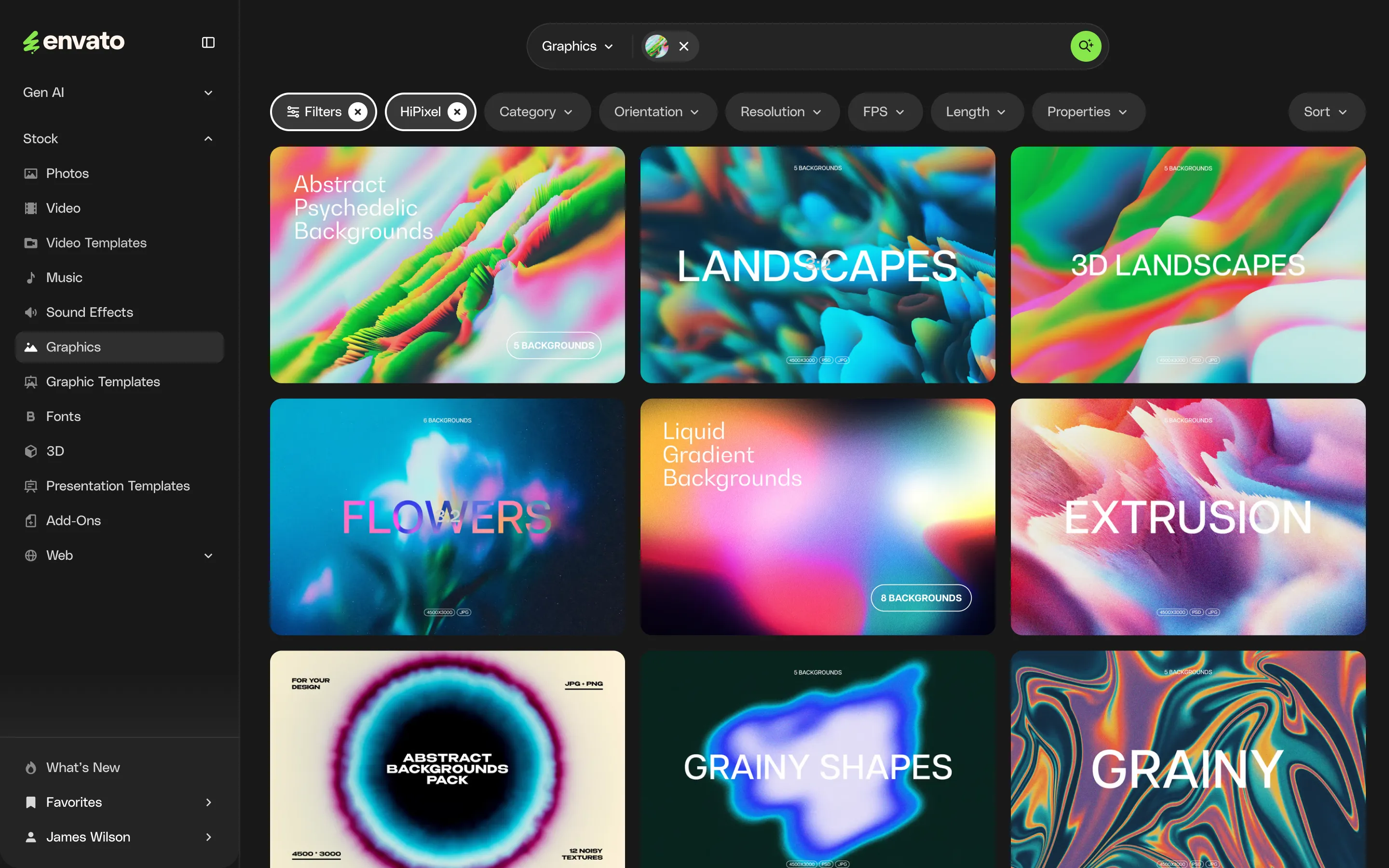
We integrated AI tools into the same app architecture and design language, creating consistency across every tool in the workspace. Generated content now lives alongside stock assets in a single workspace, so subscribers can save, organise, and access everything in one place.
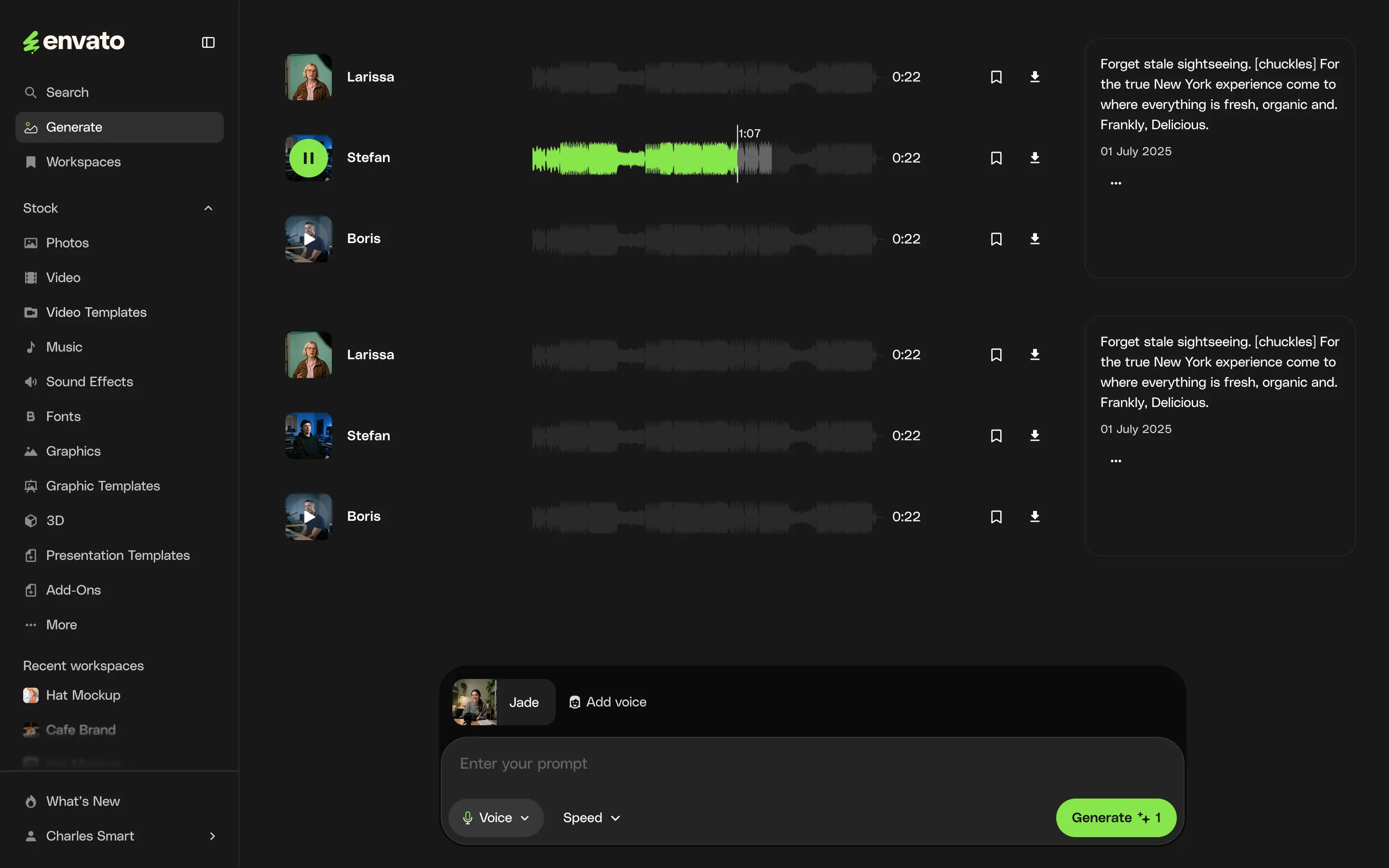
Users generate any item type within sessions. Making it easy to transition between image, video and audio smoothly.
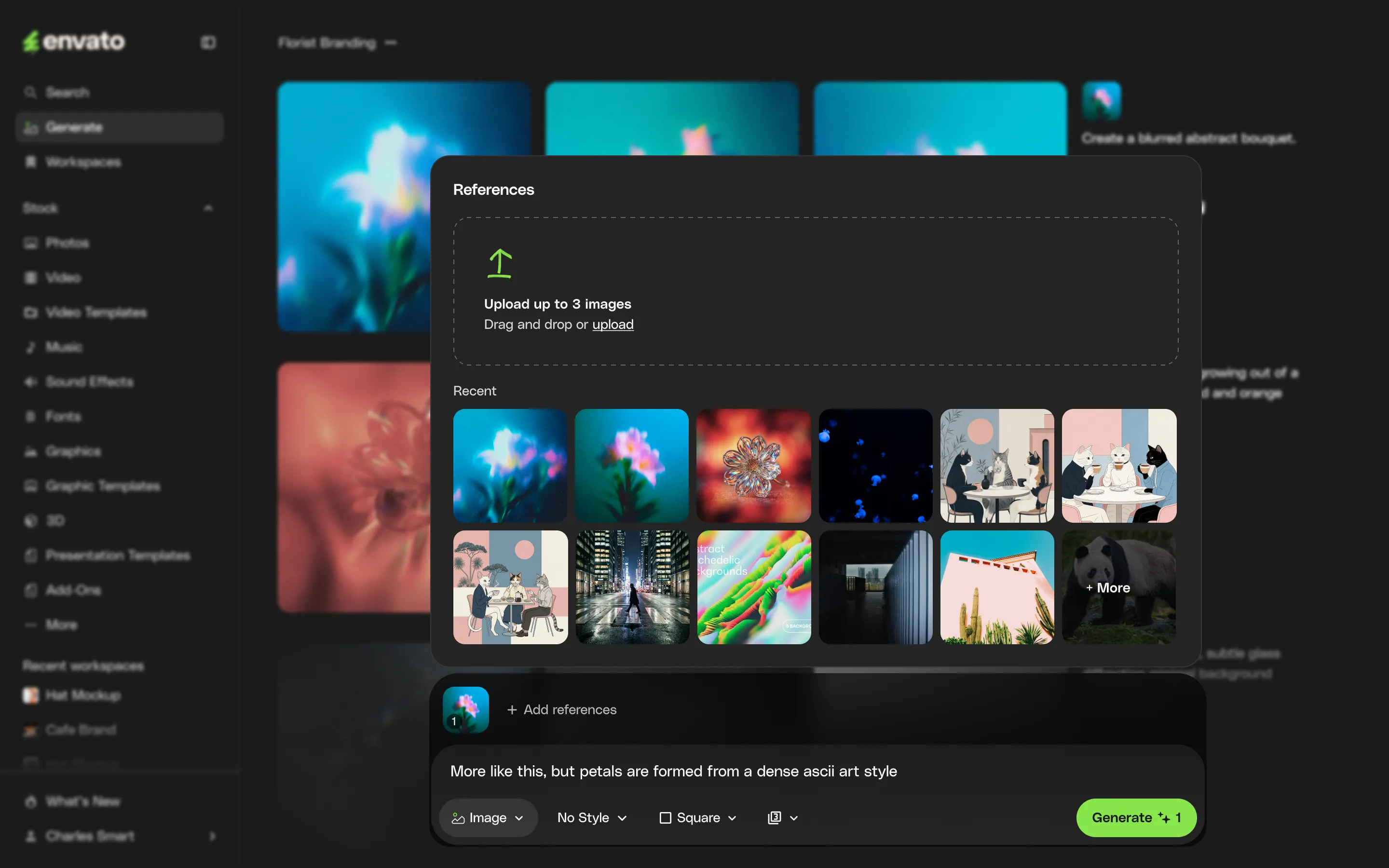
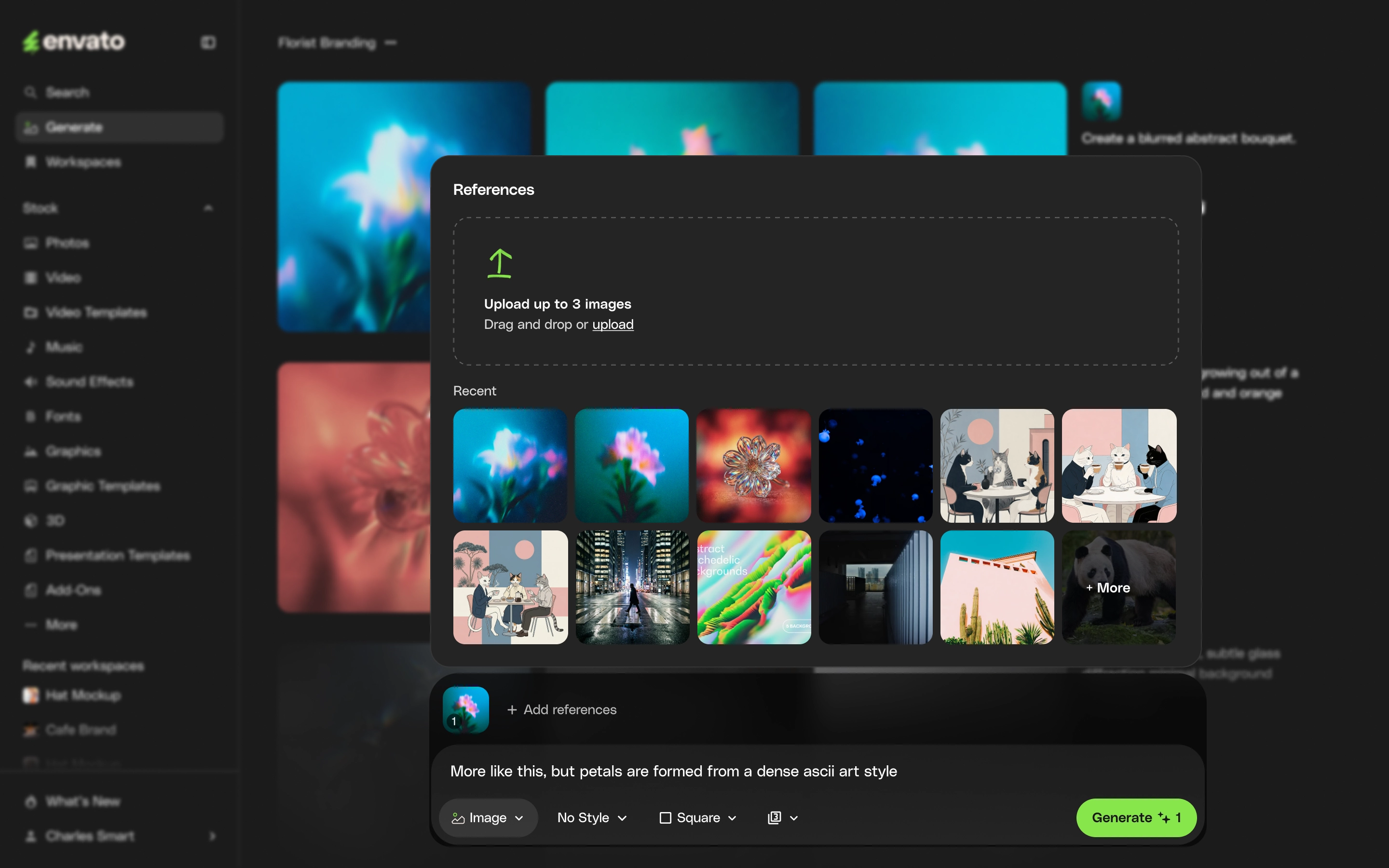
Uploads, generations and stock are accessible while generating to improve results with richer image references. A picture is worth 1000 tokens after all.
Make the core loop fast
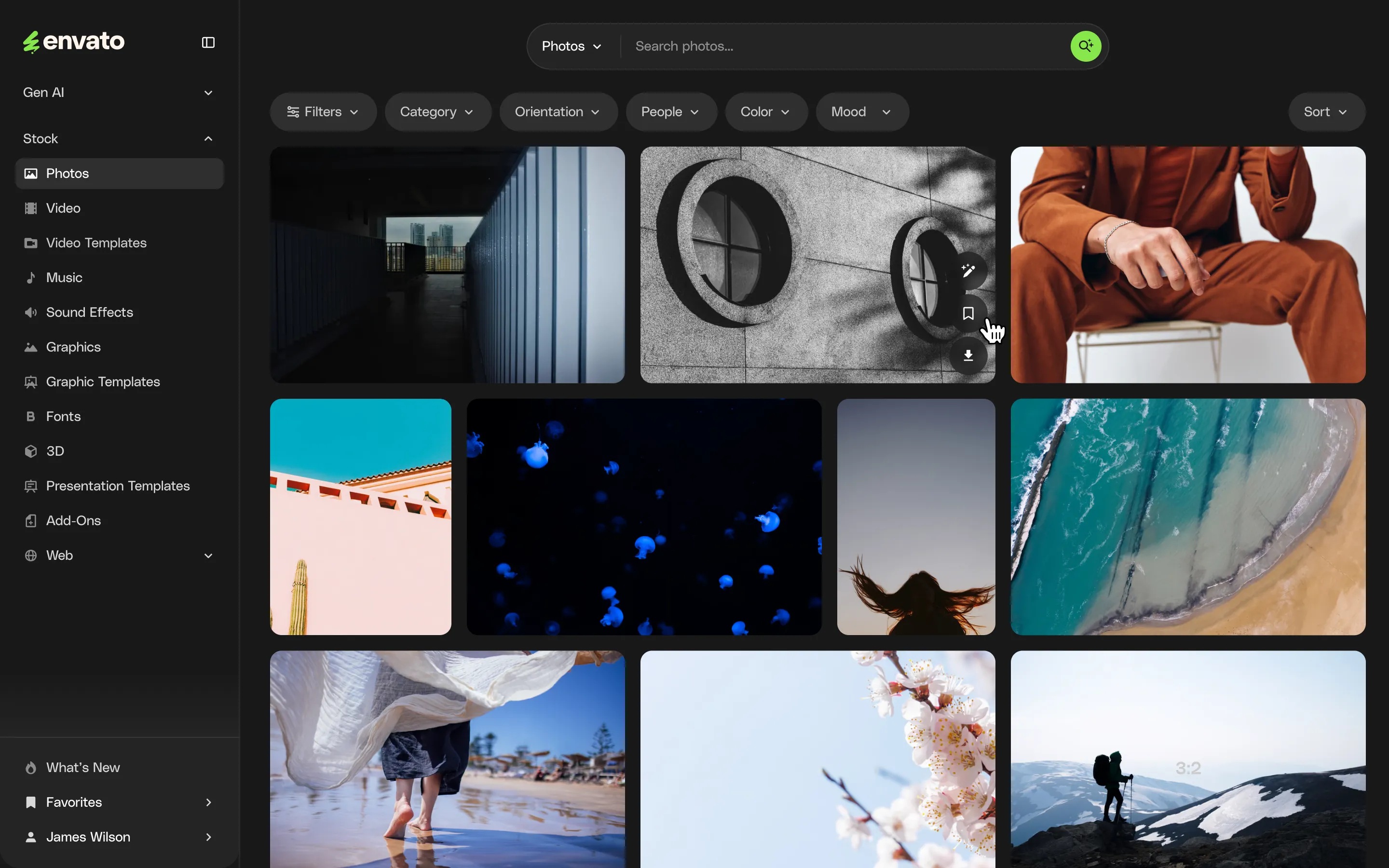
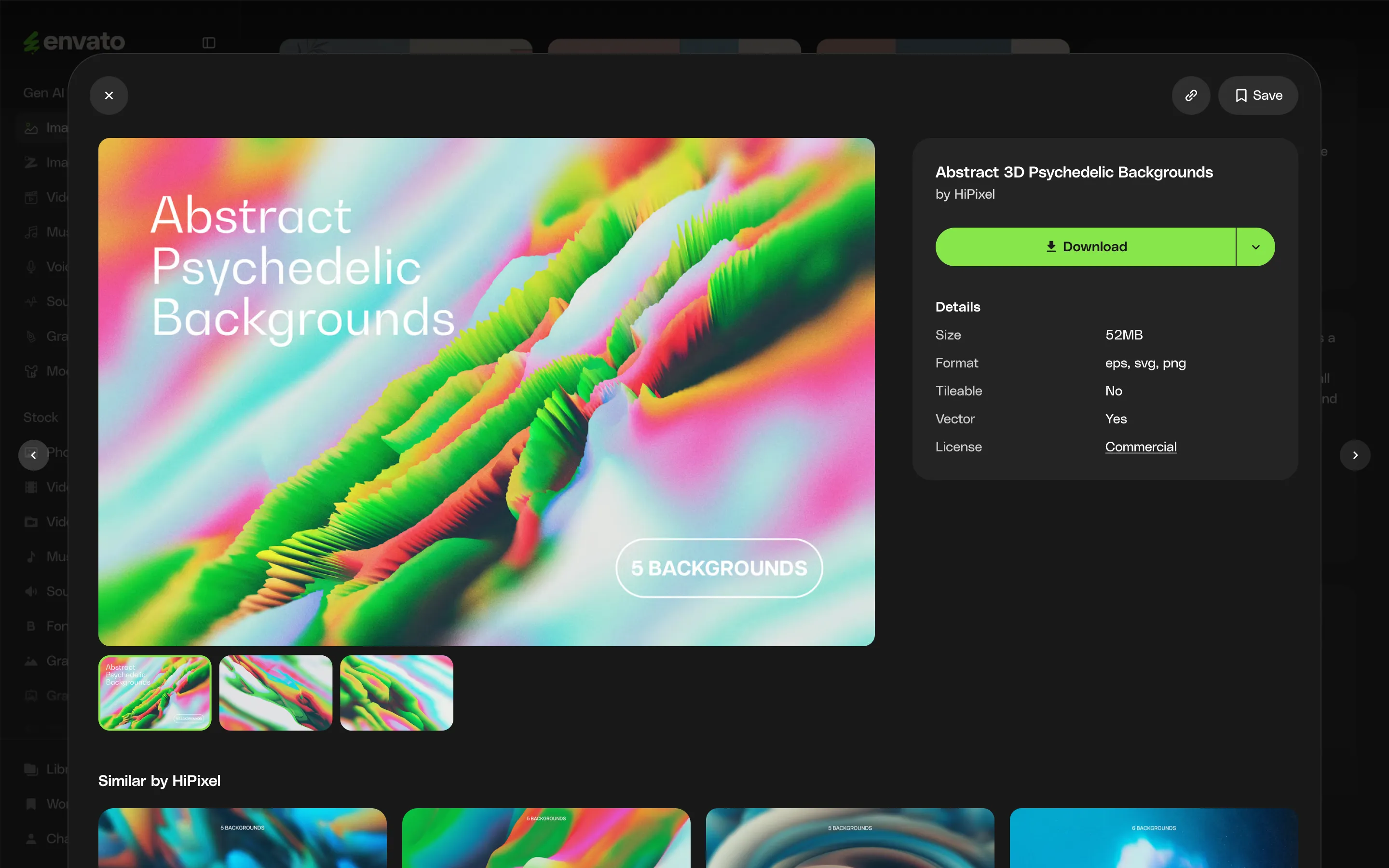
We trimmed everything unnecessary from the core loop (searching and downloading stock) and made it fast to use.
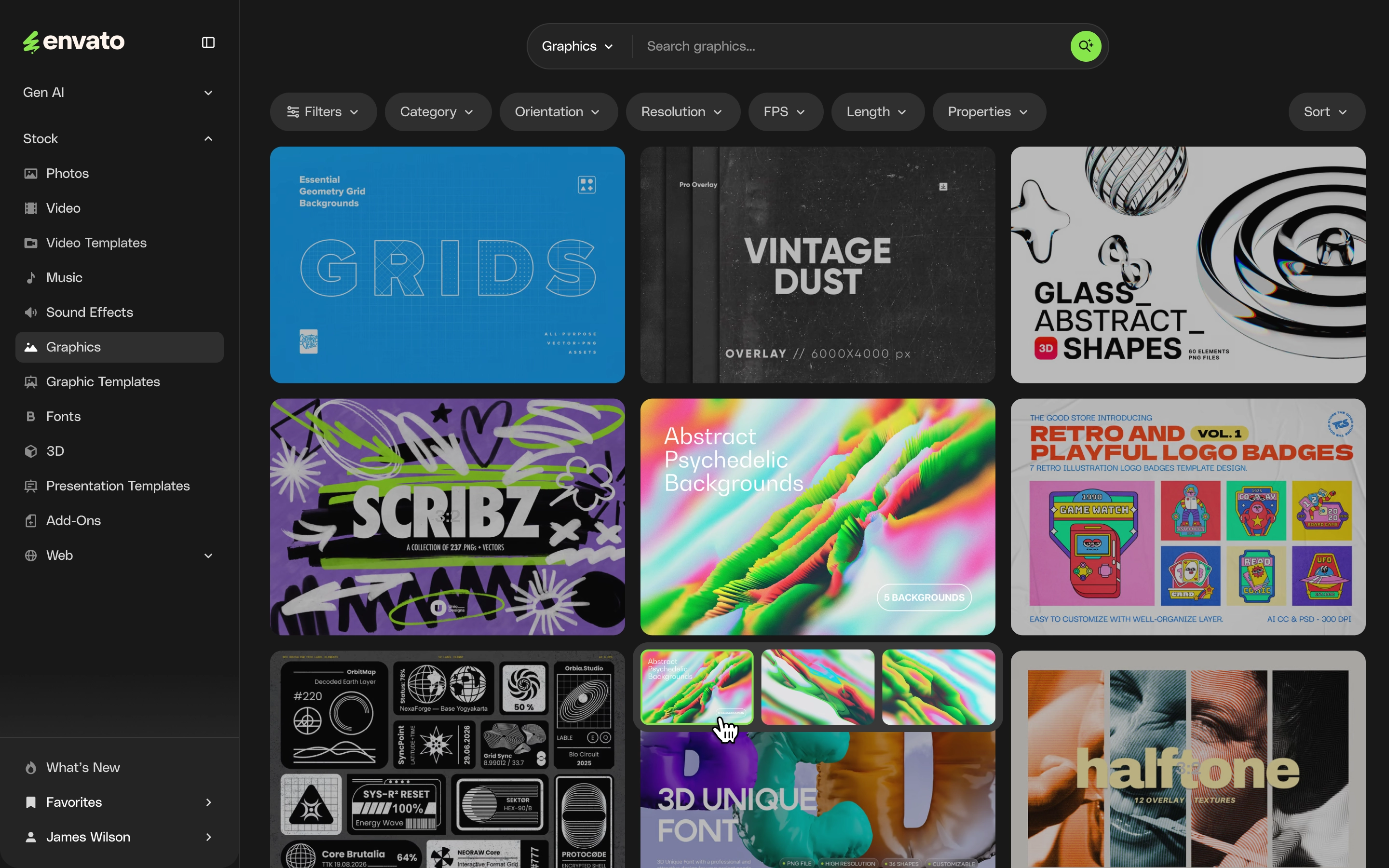
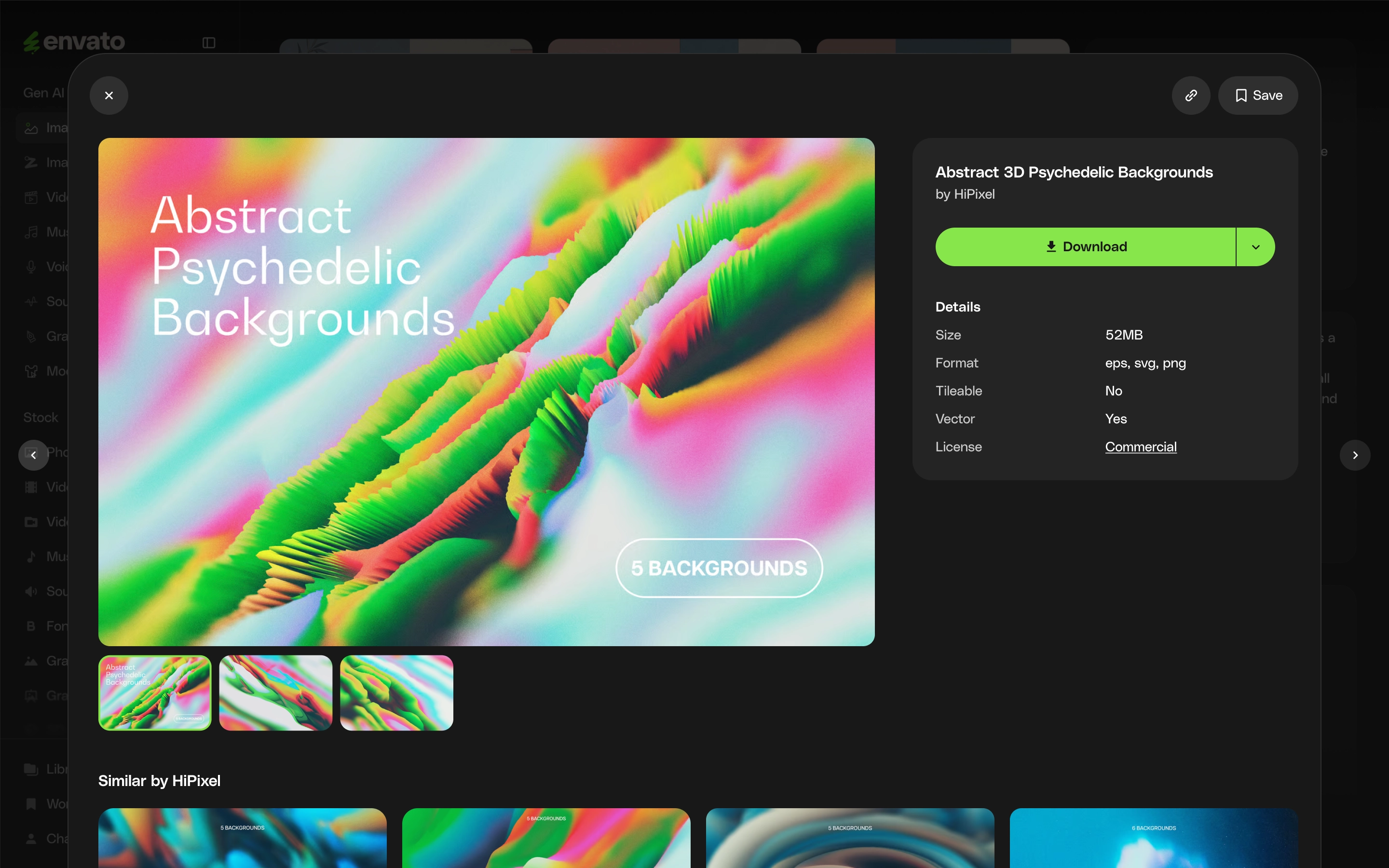
We introduced features that we knew were high impact: Infinite scroll, stock recommendations from the same author, one-click downloads, and other quality of life improvements that speed up user workflows.
As a result users downloaded more with less time searching.
Ship quick, iterate faster
The project also reoriented the team around agentic coding, which changed how we design and build at a fundamental level. By investing in our design system, codebase and building our own prototyping tools we now validate ideas and ship features more than twice as fast as early 2025.
Sidequest: I created an internal tool Designkit built on these foundations, it allows us to prototype close to the metal with real components and APIs. Designers & product folk now regularly use it and it was the core tool in shaping and communicating our Q3 strategy.
Deeper dive
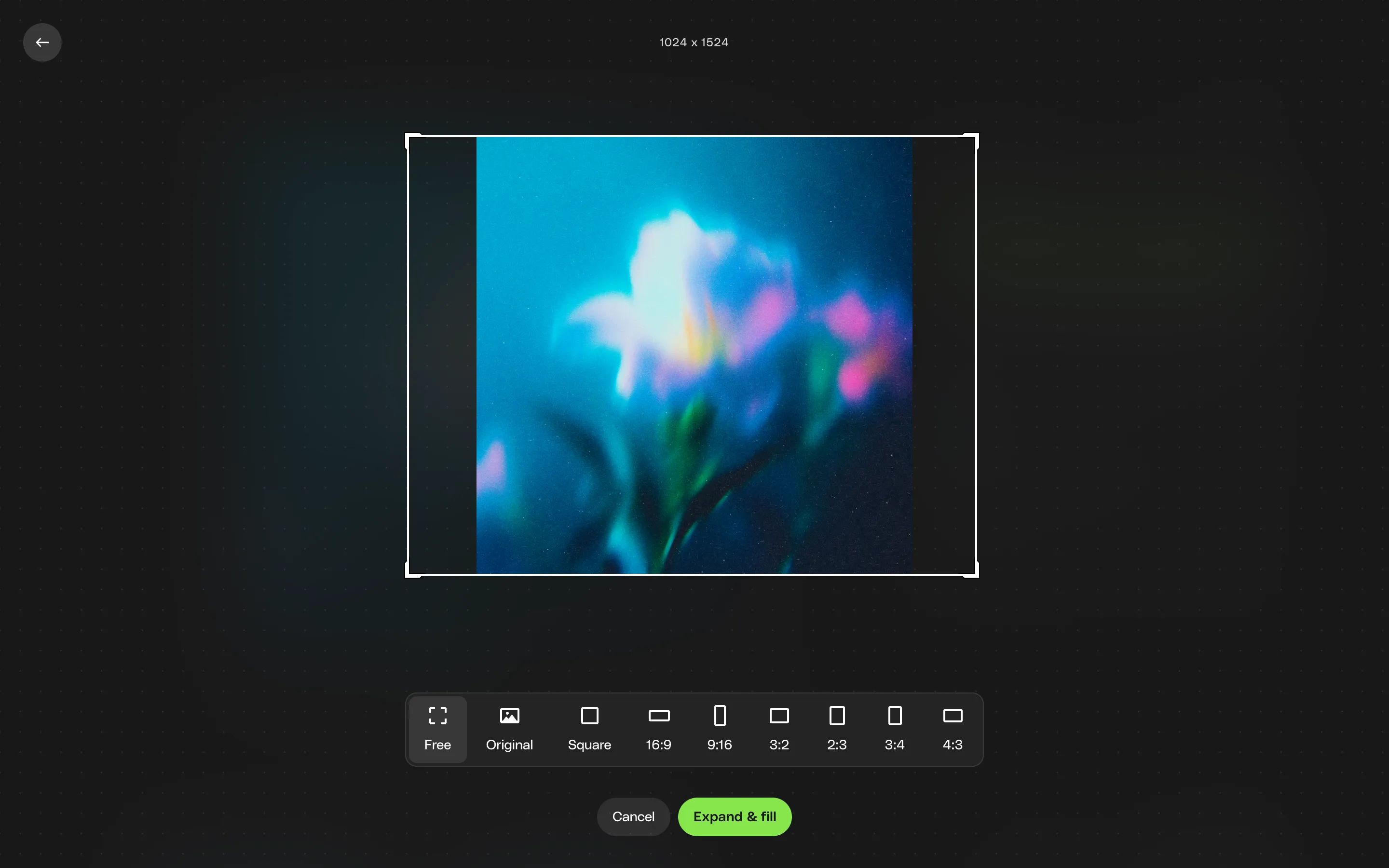
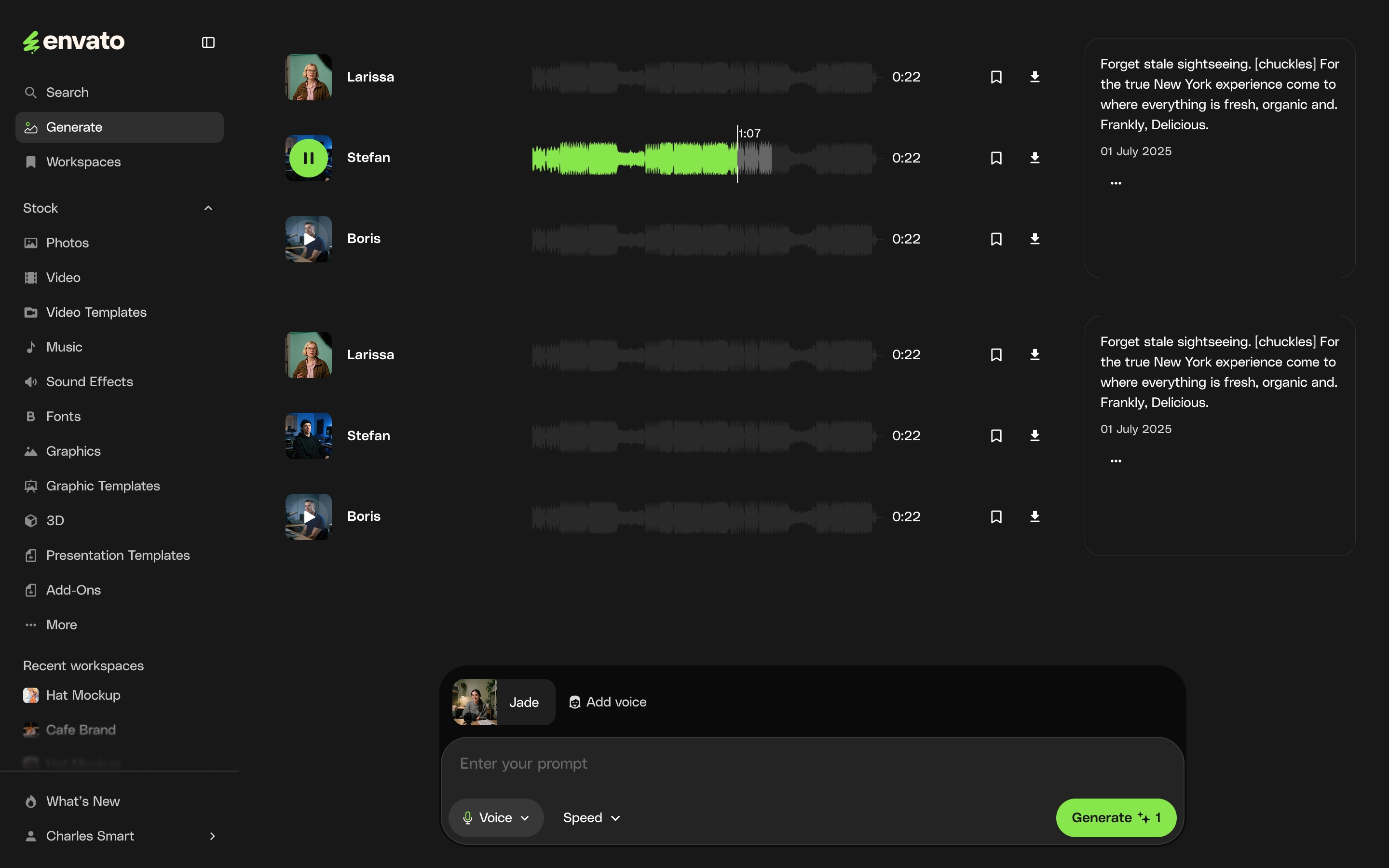
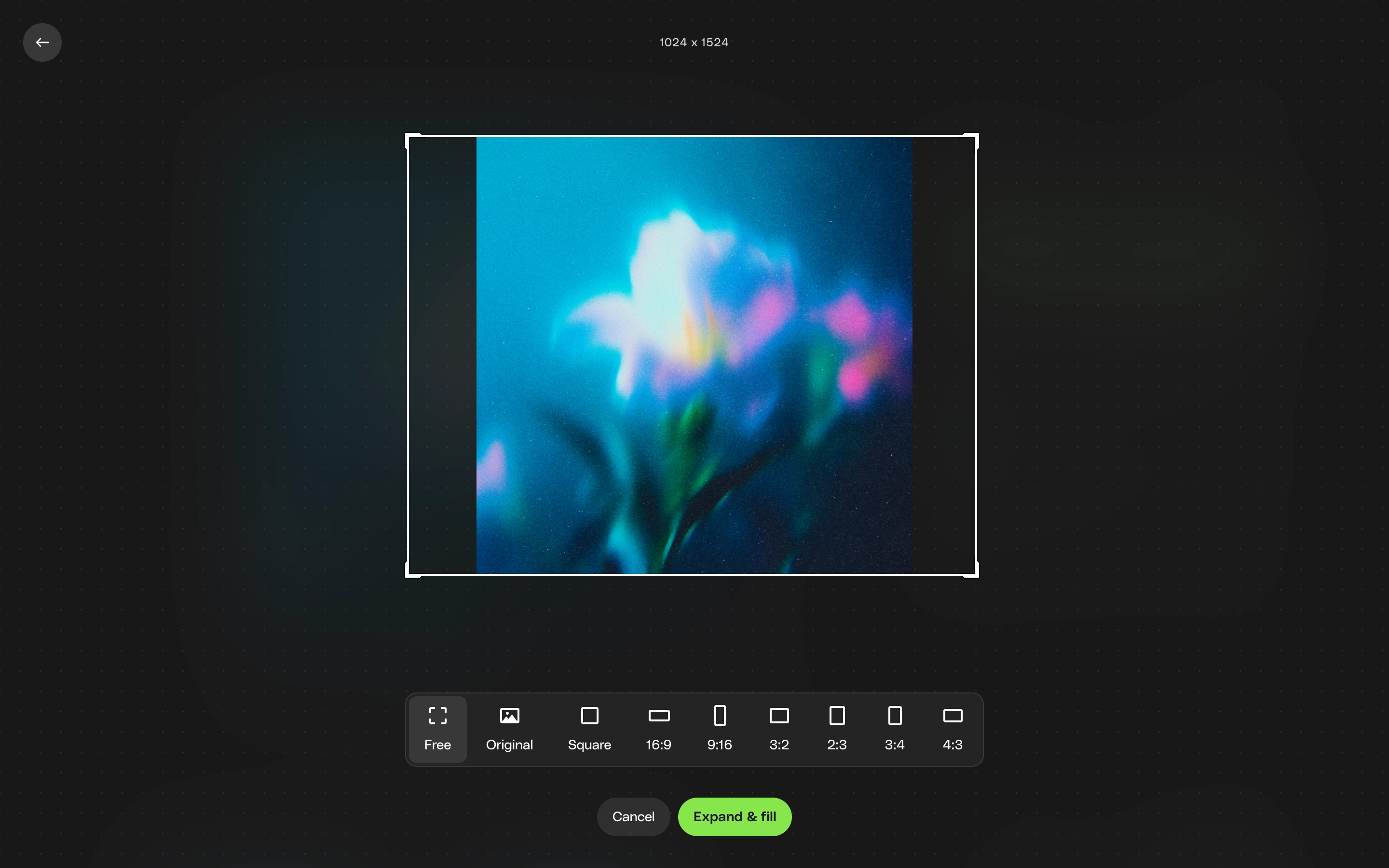
A shared design language for every tool - voice generation, image editing, video editing these now use the same UX patterns by default. Subscribers don’t have to relearn anything, a key when Envato’s USP is its breadth.
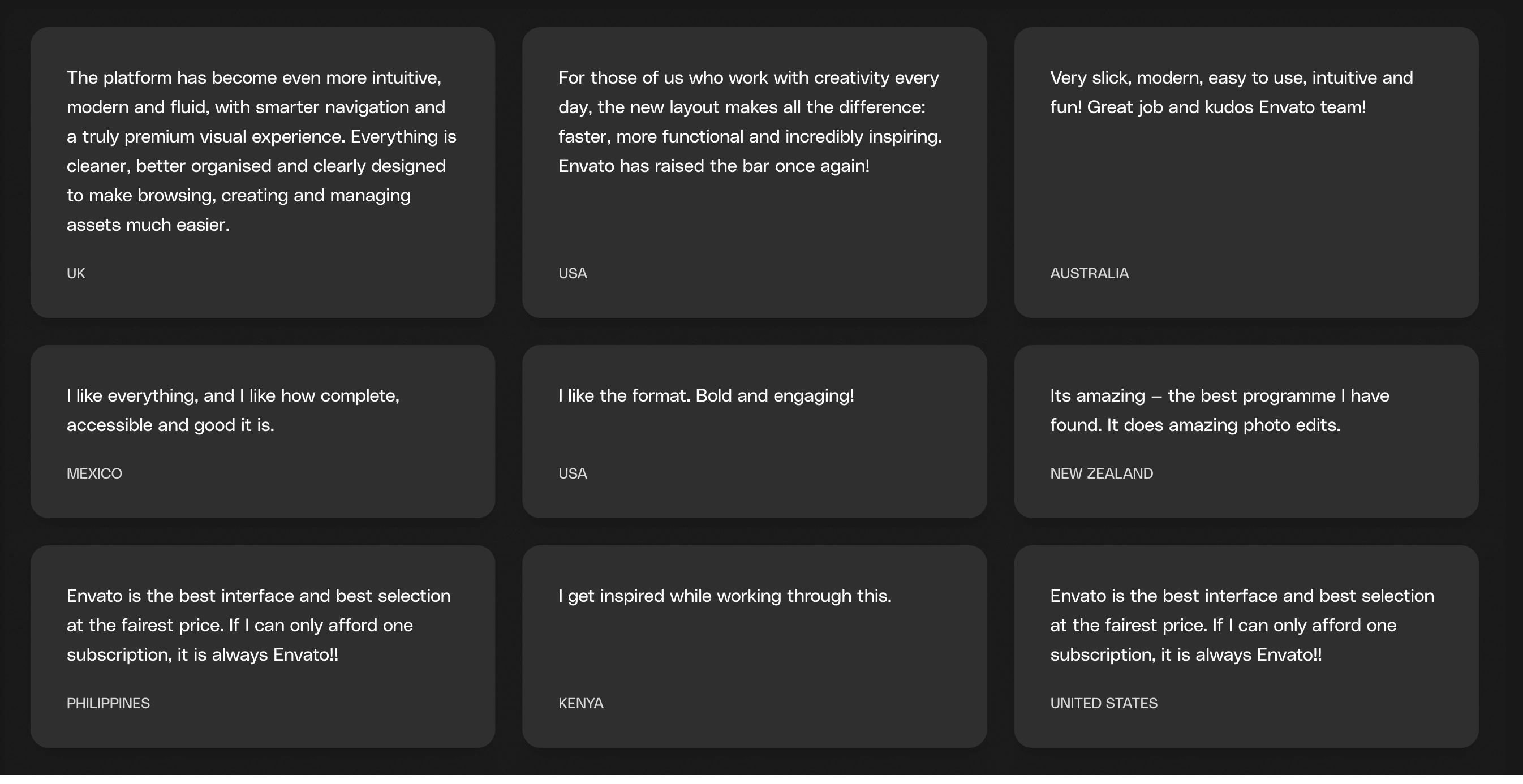
Quality-of-life work - We’ve also fixed many papercuts and shipped smaller features. More filters on our similarity search, searching author by name, better hover previews — each one is unremarkable alone. Stacked together they helped take the CSAT from ~70% to 80%.